


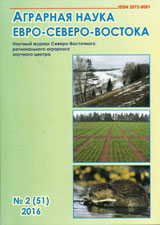
Peer-reviewed scientific journal «Agricultural Science Euro-North-East» was established in 2000. The journal is published six times per year (February, April, June, August, October, December). It is available in print and online versions. Open Access.
Currently registered with the Federal Service for Supervision of Communications, Information Technology and Mass Media (Roskomnadzor), №FS 77-72290 from February 01, 2018.
Now the founder and publisher of the journal is Federal Agricultural Research Center of the North-East named N.V. Rudnitsky (FARC North-East), Kirov, Russia http://fanc-sv.ru/.
The Journal’s mission consists in support the development of agrarian science by the way of creation of united space of scientific communication for different categories of researchers for decision of priority problems of Agro-Industrial Complex in regional, federal, and international levels on the basis of branch and interdisciplinary knowledge.
Aim of the Journal – publication and distribution of results of fundamental and applied researches conducted by native and foreign scientists for scientific support of agricultural and hunting sectors, with focus on the problems of rational use of natural resources and adaptation of agro-ecosystems of northern territories to changing climatic conditions.
Target audience – scientists, university professors, graduate students, postdoctoral, masters, specialists of agro-industrial complex from Russia, countries of CIS and far-abroad countries.
The Headings of the Journal: review papers, original scientific articles, discussions, peer reviews, current events (information on scientific events, anniversary celebrations, commemorations of scientists). Languages - Russian and English.
Since then Vasily Alekseevich Sysuev, academician of RAS is the Editor-in-Chief of the journal. Now the editorial council and the editorial board include 36 doctors of science and 5 candidates of science from 19 leading scientific and educational institutions of Russia. The international staff of the editorial council is represented by 9 scientists from Finland, China, Poland, Latvia, Hungary and Byelorussia. The editorial council includes members of Russian Academy of Science ( 7 academicians, 9 corresponding members, 3 foreign members of RAS), members of the National Academy of Sciences of Belarus, the Chinese Academy of Sciences, the Chinese Academy of Engineering.
From 2010 till present by the resolution of the Presidium of the Higher Attestation Commission (VAK) of the Russian Ministry of Education and Science the journal «Agricultural Science Euro-North-East» is included into the List of peer-reviewed scientific publications, where research results from Candidate of Science and Doctor of Science academic degree dissertations have to be published.
Information on the journal is published in the International reference system on periodic and serial publications «Ulrich's Periodicals Directory». The journal is included into Russian Index of Science Citation (RINC), Abstract journal and databases of All-Russian Institute of Scientific and Technical Information.
From 2015 the journal is included into the database of the best scientific Russian journals Russian Science Citation Index (RSCI) on Web of Science platform.
Since 2015 the journal is indexed in the International database AGRIS.
Since 2018 the publisher of the journal is a member of the International organization PILA (Crossref).
The full texts of articles are available on the websites of the following journals and scientific electronic libraries: eLIBRARY.RU, Electronic Scientific Agricultural Library, CYBERLENINKA, Google Scholar, Dimensions, BASE, DOAJ.
The journal (print) is distributed only by subscription, not available in retail.
Current issue
REVIEW
This article presents information on the botanical composition, geographic diversity, and breeding level of the active oat collection of VIR, which has served as the initial material for oat breeding in the Russian Federation more than a century-long period. Here is a description of the genetic collection including alleles of identified genes for various morphological, biological, and biochemical traits. To expand the genetic basis of cultivated oats, the article presents the results of a comprehensive study of all wild species of the genus Avena L. in terms of evolution, phylogeny, and breeding value. It also presents the results of a field study of a wide range of economically valuable traits in the active oat collection, conducted within the VIR experimental network in various ecological and geographical zones of our country. In addition to describing the identified sources of economically valuable traits, it provides an overview of a number of developed donors of semi-dwarfness and lodging resistance with various alleles of the semi-dwarf gene. The article also summarizes the results of fruitful collaboration with Russian breeding institutions in terms of distributing source material based on a comprehensive study of the active oat collection for various oat breeding directions. Thus, the active oat collection of VIR is comprehensively studied, reliably preserved, and sustainably used for breeding purposes in the Russian Federation.
The Vologda Region is a region with a well-developed dairy farming industry. High milk yields from cows cannot be achieved without the use of vitamin and mineral supplements in their diet, and the prevention of certain diseases. The aim of the review is to search for the information on pine needles-based products and implementation of those into the practice of productive animal husbandry as well as own research analysis for the period of 2018–2023. In recent years, the study on the use of pine needles and other waste products of coniferous timber processing (tar, coal, and resin) has intensified. According to the results of a patent search, pine needles in the form of pine flour and pine branches were widely used in the 1960s and 1980s. Currently, new technologies for processing fir, spruce, juniper, Scots pine, and larch needles are emerging. These include extraction, combination of needle extracts with other products (such as an aqueous infusion consisting of pine nut shells, pine needles, and arabinogalactan), production of solid-phase dispersed mechanocomposites, and the like. The products of needles processing are successfully used in agriculture, particularly in dairy farming. Moreover, these products are made from environmentally friendly raw materials. There were conducted tests of a coniferous feed additive based on pine needle extract in combination with various components (depending on the intended use). When used as a feed energy, vitamin, and mineral additive for cows during the transit period, the daily milk yield increased by 2.51–3.10 kg, resulting in a cost savings of 29.50–41.60 rubles per head per day. The use of phytoncidal coniferous ointment in the treatment of udder diseases has proven its therapeutic and economic effectiveness, depending on the diagnosis – within 111; 429; 698 rub/head. Treatment of cow metritis with a preparation based on pine tar led to a decrease in the insemination index by 0.2 and to 10 % higher number of surviving animals than in the control. The economic effect from the treatment of the experimental group was 1.9 times higher than in the control. In the experiment of treating parasitic diseases of cows (scabies mites), wounds, dermatitis and limb diseases, the costs were lower compared to the control by 40; 42–105 rub/head., respectively.
Common carp (Cyprinus carpio L.) aquaculture remains the foundation of global fish farming, whereas grain of wheat, barley and maize have traditionally served as the principal low-cost energy source in feeds. However, the extensive use of cereal feedstuffs is constrained by their limited biological value and insufficient digestibility of individual constituents. The aim of the study is to generalize and analyze information on methods for enhancing the nutritional value of grain used as feed for carp. The methodological framework comprised the search, selection, systematization and comparative analysis of scientific publications from domestic and international bibliographic databases covering the period of 2010–2025. It has been established that traditional grain raw materials are characterized by an insufficient content of digestible protein, averaging 8–12 %, a deficiency of essential amino acids, primarily lysine and methionine, as well as a significant proportion of poorly digestible carbohydrates. The digestibility of starchy polysaccharides in grain by carp does not exceed 20–25 %. The review examines approaches to improving the feed value of grain, including the use of non-traditional cereal crops, early-maturity grain and grain pile, grain processing by-products, germination, and mechanical and thermal processing. The utilization of non-traditional crops and grain processing by-products contributes to increased protein content in the diet and reduced feed costs. The use of germinated grain is accompanied by an improved amino acid profile and enhanced vitamin value. Rolling, grinding and thermal processing, including extrusion, increase nutrient availability and feed utilization efficiency.
The conclusion is drawn regarding the advisability of a differentiated selection of grain processing methods, taking into account the resource availability of farms, production conditions and economic efficiency.
ОRIGINAL SCIENTIFIC ARTICLES: PLANT GROWING
The research was carried out in the soil and climatic conditions of the Kirov region. The aim of the research was to study the forage productivity of zoned cultivars of winter rye – ‘Vyatka 2’, ‘Falenskaya 4’ and ‘Flora’, and to identify optimal mowing times that ensure maximum harvesting of green mass with high nutritional value. The research was conducted for 6 years (2019, 2020, 2022–2025). Mowing of the green mass was carried out in 3 phases of vegetation: booting (May 15–22), flag leaf (May 24 – June 6) and heading (May 29 – June 19). It has been established that the yield of green mass increases in the phases of cultivation – from 6.05–8.14 t/ha in the booting phase to 20.27–25.13 t/ha in the heading phase. The cultivar ‘Vyatka 2’ showed the highest productivity in harvesting green mass (17.29 t/ha) and dry mass (3.81 t/ha). The cultivar ‘Flora’ demonstrated the yield in harvesting green mass at the level of the high–stemmed ‘Vyatka 2’ cultivar (16.24 t/ha), while the cultivar ' Falenskaya 4’ significantly lagged behind both cultivars, yielding 13.61 t/ha. The height of the plants and their foliage varied by the cultivars and phases of vegetation. During the booting stage, not all cultivars reached the cutting stage: the height of the ‘Vyatka 2’ cultivar was 46 cm, while the ‘Falenskaya 4’ and ‘Flora’ cultivars reached only 33 cm. By the flag leaf stage, the height of all cultivars had doubled, and by the heading stage, it had increased by additional 1.5 times. Overall, the ‘Falenskaya 4’ and ‘Flora’ cultivars remained 28–31 % shorter than ‘Vyatka 2’. The correlation coefficients between the plant height and green mass yield ranged from 0.81 to 0.90. The leafiness at mowing in the early spring growing season was high (‘Vyatka 2’ – 77 %, ‘Falenskaya 4’ – 80 %, ‘Flora’ – 79 %) and decreased 1.7–2.1 times by the heading stage (to 36 %, 44 and 46 % respectively). Biochemical analysis revealed that the content of protein and fiber, as well as the levels of phosphorus and calcium, varied depending on the cultivar and the mowing date. There was a tendency for protein and calcium levels to be higher in early sampling periods, while the proportion of fiber and phosphorus increased in later green mass harvests.
The objective of the research was to evaluate 22 genotypes of hulled oats from the VIR collection for adaptive indicators of the "grain protein content" trait and to identify the most promising ones for subsequent inclusion in breeding programs. The work was carried out in the period 2023–2025 in the Kirov region. The "cultivar" factor had the greatest influence on the protein content in grain – 69.01 %. The coefficient of variability (CV) of the trait by the years of the research changed from a low of 1.02 % (k-15622 ‘Chemal’, Russia) to an average of 17.22 % (k-15607 UFRGS 930597-4, Brazil). The best conditions for the formation of increased protein content were formed in 2023 (environment index 0.56). On average for 2023–2025, the maximum protein content in grain was obtained from accessions from Sweden k-15057 and k-15054 (11.88 and 11.91 %, 2.72–2.75 % higher than the ‘Arkhan’ standard). Based on the studied trait, stress-resistant accessions were identified: k-15622 (Russia), k-15402 (France), and k-15057 (Sweden). Accessions k-15606, k-15607, k-15609 (Brazil), and k-15054 (Sweden) were characterized by high values of genetic flexibility (11.06–11.90 %). Stress resistance and genetic flexibility were combined in k-15057 Plym (Sweden). High values of the intensity level (И = 25.5–32.0) for the “protein content in grain” trait and the response coefficient (Kr = 1.30–1.40) were noted in the samples k-15040 local (Kenya), k-15600 UFRGS 086208-3, k-15607 UFRGS 930597-4 (Brazil), k-15700 Olands (Sweden). The genotypes k-15622 (ИС = 9.88), k-15402 (ИС = 6.60), k-15054 (ИС = 1.70), k-15057 (ИС = 2.72) were distinguished by stability in protein content. In 11 genotypes the adaptability coefficient (CA) was greater than 100 %. Ranking by the adaptability indicators made it possible to identify accessions capable of producing the highest protein content in grain under the conditions of the cultivation region: k-15600 UFRGS 086208-3, k-15607 UFRGS 930597-4, k-15609 UFRGS 953195 (Brazil), k-15700 Olands, k-15054 Sirius II (Sweden) (sum of ranks 54–61). These genotypes are distinguished by their adaptability to changing environmental conditions according to the “grain protein content” trait and are recommended for use in creating new breeding material.
Cottonseed oil ranks third in the world after soybean and rapeseed oil in terms of oilseed raw material production and contributes significantly to dietary diversity. The quality, oxidation stability and biological effectiveness of vegetable oil depend on its fatty acid composition. Oil oxidation stability is important for oil producers and retailers as it prolongs the product shelf life. The aim of the research was to assess the fatty acid content of cottonseed oil of the species Gossypium hirsutum, G. herbaceum, G. Barbadense grown in the Southern and North Caucasian Federal Districts of the Russian Federation in relation to the place of cultivation and belonging to the species. The task was to describe the interdependencies of the oil quality components, to rank the factors determining the dispersion of variables, to assess the quality traits by factor loadings. Fatty acids (FA) were studied using gas-liquid chromatography. It was established that the cottonseed oil was characterized by a high content of linoleic (40.94 %), oleic (33.49 %), as well as palmitic (14.76 %) and stearic FA (6.03 %). The content of other acids was less than 1.2 %. The influence of the growing area on the content of linoleic and oleic acids was weak. The highest factor loadings for the main factor 1 (44.6 % of variance) were carried by arachidic (-0.89), heptadecenoic (-0.87), palmitoleic (-0.85), behenic (-0.85), margaric (-0.80), palmitic (-0.78), myristic and eicosadienoic acids (each by -0.76). Factor loadings of the cotton species traits and its cultivation zone were minimal. Despite the percentage predominance of linoleic, oleic, palmitic and stearic acids, significant factor loadings (-0.89…-0.78) were identified for minor acids playing an important role in the metabolic formation of oil quality, the biogenesis of which is functionally associated with the accumulation of oleic and linoleic acids characteristic of the oil.
The aim of the study was to investigate the biological characteristics and compare two accessions of different origins of the rare endemic species Allium grande Lipsky under cultivated conditions. The research was carried out in 2011–2024 in the northern forest-steppe zone (Bashkir Cis-Urals). The study revealed that accessions grown from seeds of different origins (Dagestan Republic and Estonia), but growing under identical conditions, differ phenotypically, in seed productivity, and in phenological phase dates. The Dagestan accession exhibits higher performance than the Estonian accession in all parameters, including morphometric parameters and seed productivity. Phenological observations revealed an earlier maturation date for the Dagestan accession. According to the coefficient of variation scale, most traits exhibit normal variability (CV = 6.1–24.4 %). Factor analysis showed that air temperature has the greatest impact on phenological phases, a key factor for the growth and development of individuals. A. grande accessions demonstrated good frost resistance under our conditions, and no damage from pests or diseases was detected. Biochemical analysis revealed high levels of biologically active substances (such as ascorbic acid – 140.45–165.3 mg%, carotene – 4.89–7.38 mg/100 g, etc.) in the leaves of A. grande specimens during spring regrowth. The rarity of A. grande is likely due to its long period of pregenerative development. Cultivation of this rare endemic species in a botanical garden is important for preserving the gene pool and can be considered as an effective method of preserving it outside its natural habitat.
Currently, active breeding work is underway to create honeysuckle cultivars with a high level of biologically active micronutrients, the content of which is associated with the growing area, the cultivar and the agricultural cultivation methods. The aim of the research was to study the level of accumulation of macroand micronutrients in blue honeysuckle fruits and to identify accessions with increased mineral value of the fruits. The material for the study consisted from the fruits of 7 cultivars of blue honeysuckle bred by the Sverdlovsk breeding station of horticulture harvested in 2024. The elemental content was determined by inductively coupled plasma atomic emission spectrometry. Twenty mineral elements were found in the fruits, most of which were contained in all accessions with the formation of a descending series: K > P > Ca > Mg > Si > Fe > Al > Mn > B > Zn ≥ Ba > Ni > Sr > Cu > Ti. Selective accumulation capacity for Co, Cr, Na, Se, V has been determined. Upon consumption of 100 g of fruits of the studied honeysuckle cultivars the need of an adult for essential macro(K, P, Ca, Mg) and microelements (Fe, Mn, Co, Cu, Se, Zn) is provided insignificantly – by 5–7 %, with the exception of honeysuckle original form 1-18-11, which is able to satisfy a greater need for conditionally essential: V – by 93.3 %, Cr – by 37.5 %, Si – by 21.1 % and essential microelements: Fe – by 40.0 %, Co – by 20.0 %. The obtained results suggest that this form can serve as a source material for further breeding work aimed at improving the mineral composition of honeysuckle fruits. A very strong correlation (p < 0.001) was established between the complex of elements: Al, V, Si, Mn, Fe, Cr (r = 0.95–1.00) in all honeysuckle fruits. The use of any agricultural practices aimed at reducing the accumulation of Al or V in fruits will simultaneously contribute to a decrease in the levels of Fe, Mn, Si, Cr in them.
Mint (Mentha L.) is a widely cultivated medicinal and aromatic crop. Its value is associated with the content of essential oils, carotenoids, polyphenols, organic acids, soluble sugars, and other bioactive components. Currently, there is growing interest in qualitatively and quantitatively increasing the content of health-beneficial compounds in mint leaves and inflorescences. The aim of our work was to conduct a comprehensive comparative analysis of the biochemical composition and antioxidant activity of 34 accessions of four species of the Mentha (M. suaveolens, M. longifolia, M. × piperita, M. spicata) of VIR Mentha collection, grown in the North-West Russia (St. Petersburg) in 2024-2025. The content of photosynthetic pigments, ascorbic acid, phenolic compounds, flavonoids, and antioxidant activity was determined spectrophotometrically. Significant interspecific and interannual variability in biochemical parameters was revealed. In the less favorable temperature regime of 2025, the chlorophyll content decreased by an average of 44%, and carotenoids by 30–50 % compared to 2024. Simultaneously, there increased the content of ascorbic acid (from 0.07±0.01 to 0.21±0.03 mg·g⁻¹) and phenolic compounds. The maximum content of phenolic compounds was noted in M. × piperita accessions (62.99 mg GA eq·g⁻¹ in 2025). M. suaveolens and M. longifolia accessions showed a tendency for increased flavonoid accumulation. The antioxidant activity of all species' accessions was consistently high (>83 %) with a low coefficient of variation (3.28–4.25 %). Principal component analysis differentiated the accessions into 6 statistically justified groups, indicating high intrageneric diversity. Promising genotypes were identified: M. × piperita and M. spicata accessions as sources of phenolic compounds and β-carotene. The results confirm the high adaptive potential of the studied species and the possibility of targeted selection of accessions with a specific biochemical profile for use in the pharmaceutical and food industries.
STORAGE AND PROCESSING OF AGRICULTURAL PRODUCTION
In order to summarize the information on foods for special dietary uses (FSDU) for adults registered in the Russian Federation, the methodology of a systems approach was used in the expert assessment and analysis of the types of such products. The analysis was performed using the database of the unified regulatory and reference information of the EAEU. The studies of the list of FSDU were carried out in the period from March 2024 to January 2025 for the classification, component composition and consumer form of products. During the observed period, in the territory of the Russian Federation, when searching for "specialized food product", 4283 units of FSDU were identified that had valid and signed certificates of state registration. The specified FSDU belong to the categories: "biologically active food supplements", "specialized food products for sports nutrition", "enteral nutrition mixtures", "specialized products for dietary prophylactic and dietary therapeutic nutrition", as well as "fortified products and dishes". In all categories of FSDU, dry forms prevail: mixes, kissels, smoothies, cocoa, tea drinks, cocktails, cream soups, porridge, sweets, bars, etc. The vast majority of FSDU are created using plant-cereal raw materials, to improve the nutritional value of which various types of ingredients of dairy origin or their combinations are used: milk proteins, skim milk, whey protein concentrates, etc. However, the range of specialized dairy products is very limited. To meet the growing consumer demand for food products with specified quality characteristics and ensure food independence of the country, deep processing of any food raw materials and expansion of the range of FSDU are necessary. These areas of food technology development remain a priority for the development of the agro-industrial complex.
AGRICULTURE , AGROCHEMISTRY, LAND IMPROVEMENT
The continued high level of anthropogenic impact on natural water bodies inevitably leads to a deterioration in their ecological state. In such conditions, farmers need to ensure control over the quality of water resources, which can be achieved through physical and chemical monitoring. Despite the advantages of this approach, the existing limitations in interpreting the results, especially in eutrophic water bodies, pose a significant obstacle to its widespread implementation in practice. The article presents an attempt to develop a methodology for accounting for the eutrophication factor when monitoring water bodies using the physical and chemical method, which provides a better interpretation of the obtained data and makes it possible to implement this type of monitoring process in eutrophied waters. This methodology is based on the variability of basic hydrochemical parameters of the aquatic environment (pH, dissolved oxygen concentration, total mineralization), which are subject to variability as a result of phytoplankton activity. In 2022–2024, in the Central Reach of the Kuybyshev Reservoir, correlation relationships between the density of phytoplankton clusters and the content of dissolved oxygen (0.56…0.77), hydrogen index (0.49…0.63), and total mineralization (-0.57…-0.72) were determined to confirm the hypothesis about the possibility of using these indicators together in the monitoring process of eutrophic waters. The research results revealed a stable moderate-high correlation between the studied variables, as well as a specific pattern of their variability depending on the presence of phytoplankton in the water. Based on this interaction, the above-mentioned methodology has been developed, which involves the determination of three new values: specific variability of hydrochemical parameters (KD), the degree of influence of the phytoplankton factor on hydrochemical parameters (FD), as well as the amount of phytoplankton present in the aquatic environment (P). These indicators make it possible to expand the capabilities of standard physical and chemical monitoring in the context of widespread anthropogenic eutrophication and assess the suitability of water bodies for agricultural practices.
FODDER PRODUCTION: FIELD AND MEADOW
The aim of the research is to investigate the comparative productivity of mono-specific and binary plantings of Poterium polygamum and Festulolium in association with perennial leguminous grasses during their first year of growth. Field experiments were conducted from 2022 to 2024 in the forest-steppe zone of the Central Caucasus (Vladikavkaz) on medium-depth heavy clay bleached chernozems overlaid with pebble beds. The area falls within the III agro-climatic zone, characterized as moderately warm with unstable moisture conditions. The objects of the study included: Poterium polygamum (‘Slava' cultivar), Festulolium (‘Vik-90’ cultivar), Galega orientalis (‘Bimbolat’ cultivar), Medicago varia (‘Bagira’ cultivar), Onobrychis arenaria (North Caucasian two-cut cultivar), and Trifolium pratense (‘Daryal’ cultivar). A narrow-row sowing method was employed in the experiment. Seeding rates were established at 2 million viable seeds/ha for Poterium polygamum, 10 million seeds/ha for Festulolium, and 4 million viable seeds/ha for perennial leguminous grasses. In the mixtures, the seeding rate of each component was reduced by 50 %. The research indicated that mixed sowings exhibited lower seedling emergence and plant survival rates compared to monocultures. Notably, the decline in the survival of leguminous grasses in mixtures with Poterium polygamum was particularly pronounced, with survival rates dropping by 11.9 to 18.5 % compared to mono-specific plantings. However, despite the reduced survival of legumes by the end of the first year of growth, their productivity in mixed sowings was found to be higher. Leguminous grasses in combination with Poterium polygamum achieved green mass yields ranging from 21.1 to 21.8 t/ha; the collection of feed units was between 3.87 to 4.12 thousand/ha, and the accumulation of dry matter in both aerial and subterranean biomass ranged from 7.16 to 7.85 t/ha. The yield of digestible protein amounted from 747 to 840 kg/ha, with metabolizable energy output ranging from 63.14 to 67.41 GJ/ha. Mixtures containing Festulolium also surpassed monocultures in all productivity parameters. The maximum yield was observed in the Festulolium and Galega orientalis mixture, which achieved a green mass yield of 17.5 t/ha, along with a high nutritional value of 4.62 thousand/ha feed units and 752 kg/ha of digestible protein.
ЗООТЕХНИЯ
The purpose of the study was to provide an economic justification and calculate the profitability of milk production when using Lamarin Saldonum bio additive in the diets of highly productive cows in different physiological periods, as well as to determine the amount of damage prevented through the use of this additive. The experiment was conducted in 2021 on four groups of full-aged Holstein cows (3 experimental and 1 control, 10 heads each). Cows of all three experimental groups received the bio additive Lamarin Saldonum at a dose of 0.4 g/kg body weight everyday for 60 days. The start of feeding the supplement in the first group was 30 days before the expected calving, in the second – 60 days before the expected calving, in the third – on the day of calving, the fourth control group did not receive the supplement. The calculation of the economic efficiency of using the additive in diets of cows and the profitability of milk production, as well as the prevented damage from cow's infertility, was carried out using generally accepted methods. In the course of the study, it was found that the most effective is the inclusion of Lamarin Saldonum in the diets of cows in the late dry and early post-calving periods (the first group). This is confirmed by a decrease in the cost of milk production by 9.11 % due to an increase in gross yields, reducing the cost of fruitful insemination of 1 head by 650 rubles, a decrease in the total economic damage from cows' infertility by 25,927.58 rubles per head, and increase in the profitability of milk production by 14.35 percentage points compared with the control group. In addition, using Lamarin Saldonum according to the specified period makes it possible to get 3.36 rubles of additional profit and 9.00 rubles of prevented damage per 1 ruble of additional costs.
The aim of the study was to evaluate the effect of 12 complex GN and LEP genotypes on cow productivity in order to identify consistently effective allele combinations that account for genotype-environment interactions, and to develop personalized strategies for herd breeding and management. The conducted study revealed a significant association between complex genotypes of the somatotropin (GH, LV polymorphism) and leptin (LEP, R25C and A80V polymorphisms) genes and milk productivity in Holstein cows. A study of 120 animals (60 animals each from two agricultural organizations) showed a marked uneven distribution of the 12 analyzed genotypes in both herds, due to the farm breeding priorities. A key result was the identification of the GHLVR25CRRA80VAA genotype as the most promising for breeding for high lifetime milk productivity. Animals with this genotype consistently demonstrated maximum milk yields in the first and third lactations and lifetime productivity, demonstrating stability and high genetic potential. In parallel, genotypes associated with milk quality traits were identified. For example, in animals carrying the GHLVR25CCCA80VVV genotype at Organization "K," the lifetime fat and protein content was 3.92 and 3.27 %, respectively. Animals with the GHLVR25CCRA80VAA genotype in Organization "P" had a maximum fat content of 4.13 % while maintaining high milk yield. The study confirmed the critical influence of environmental factors (feeding, management) on the realization of genetic potential. The significantly higher milk yields in Organization "P" compared to Organization "K" highlight the need for a systematic approach combining genetic selection with improved livestock production technologies. The obtained data demonstrate that the complex GH and LEP genotypes serve as informative markers for predicting milk productivity and the adaptive potential of cows.
VETERINARY MEDICINE
The article presents the results of studies on evaluation of the effectiveness of the flavobetin drug in the prevention of pathologies of labor and postpartum period in cows under heat stress. Clinical trials of the new veterinary drug were carried out during the period of influence of high-temperature atmospheric factors on farm animals, which caused the development of heat stress. For the studies in June 2024, five groups of 10 individuals each (four experimental and one control) were formed from cows in the initial dry period. The livestock of the first three experimental groups was given flavobetin in different courses (during thirty, forty-five and sixty days) up to calving – once a day at a dose of 50 grams per cow. The fourth experimental group received the comparison drug – betaine, and the herd of the 5th group served as a control. During the experimental period, the herd was clinically examined daily, and one week after calving the blood was taken for laboratory tests from 5 cows in each group. Calculation of the temperature-humidity index has shown that in the summer period, cattle almost constantly experience heat stress – from low to moderate. A course of flavobetin drug use in cows during the period of exposure to high ambient temperature makes it possible to reduce the clinical manifestations of heat stress and has a positive effect on blood parameters, which is manifested by a decrease in the concentration of cortisol by 11.54–25.11 % with an increase in the progesterone content by 6.85–15.06 %. In the experimental cows, relative to the control, a decrease in the markers of endogenous intoxication in the blood was also registered. Conducted clinical trials have demonstrated the high prophylactic efficiency of the drug flavobetin in pathologies of labor and postpartum period in cows, confirmed by a reduction in the number of stillborn calves and ketosis by 10 %, retention of placenta, postpartum endometritis and subinvolution of the uterus by 10–30 %.
During the study there was evaluated the effectiveness of treatment of acute catarrhal mastitis in cows using complex approach that included the application of antimicrobial preparation and testicular hyaluronidase. For the experiment, two groups of animals were formed, 10 heads each, with clinical signs of acute catarrhal inflammation of one of the udder quarters. All cows were given the drug “Vaccamast” in a dose of 10 ml intracisternally, as well as a supramuscular novocaine blockade on the day of diagnosis. In the experimental group, 1280 units of testicular hyaluronidase solution were additionally administered intracisternally. The results of the study showed that the relief of the inflammatory process was accompanied by an increase in the level of milk productivity: in the experimental group – by 6.2 liters (P< 0.05), in the control group – by 6.4 liters (P<0.01). After completing the therapeutic course, in the group where testicular hyaluronidase was used, the average concentration of somatic cells was 234.2 thousand/ml lower (P<0.05) compared with the control group, and the number of cows with a concentration of somatic cells of more than 500 thousand/ml was less than four times. In animals that were not injected with the enzyme, the average electrical conductivity of milk was 0.6 mSm/cm higher than in the group receiving testicular hyaluronidase (P<0.001). In addition, the number of individuals with electrical conductivity exceeding 7.0 ms/cm in the control group was twice as high. The duration of therapy of animals with the use of testicular hyaluronidase was 4.1 days, and without its use – 4.4 days. During a month of observation, no recurrence of mastitis was detected in the experimental group, whereas in two cows that did not receive the enzymatic preparation, mammary gland inflammation was rediagnosed. After the treatment, the activity of AsAT in the experimental group was 28.9 % lower (P<0.01) compared with the control group, and the de Ritis coefficient was 1.46 % lower (P<0.01). The activity of GGT using the enzyme decreased by 23.8 %, which led to a decrease in this indicator relative to the control by 41.9 % (P<0.01). Thus, the results of the study indicate that the intracistern application of testicular hyaluronidase increases the effectiveness of complex therapy of acute mastitis in cows during lactation.
MECHANIZATION , ELECTRIFICATION , AUTOMATION
The optical properties of meadow and alfalfa hay of various fractions and classes were studied. The purpose of the research was to identify the quality hay class by optical properties in photoluminescent identification. The spectral characteristics of excitation and luminescence were obtained using a CM2203 spectrofluorometer. Excitation spectra in the wavelength range of 230–600 nm and photoluminescence spectra at excitation of 362 nm, 424 nm, 684 nm were measured. The integrated absorption capacity and photoluminescence fluxes, as well as statistical parameters were calculated. All spectra had right-sided asymmetry, with the exception of alfalfa hay, and pronounced flatness. It has been established that alfalfa hay vibrates more strongly at 684 nm than meadow hay, and vice versa at 424 nm. The difference in the integral photoluminescence fluxes for different types of hay is 1.5–3.9 times, for different quality classes – 3.7–19.3 times. As a result of the research, informative excitation wavelengths were revealed to identify the grade of hay. A method for determining the amount of 1st class hay in meadow mixed-grass hay can be implemented through the analysis of the flow ratio Φ362 /Φ424, and a method for the objective identification of higher-protein alfalfa hay – by analyzing the flow ratio Φ362 /Φ424. The value of the results obtained lies in the formation of a theoretical basis for the production of analytical instruments used in agriculture for the diagnosis of feed on a cheaper and small electronic component base. The hardware implementation can be carried out using monochrome LEDs as radiation sources, and photodiodes as radiation receivers.
The relevance of this research topic is related to the problem of reducing the negative impact of technological processes on the environment during crop cultivation in various soil, topography, and climatic conditions. The objective of the research is to evaluate technological processes in crop production based on their negative environmental impact. Technological processes determine soil fertility, emissions of climate-active substances, and the removal of nutrients from agricultural lands. To develop promising environmentally friendly technologies, it is important to classify and evaluate processes according to their negative environmental impact. The proposed gradation allows for the structuring of all processes based on their impact on the agroecosystem, and the resulting assessment will enable the future development of technical and technological solutions that ensure the environmental sustainability of crop production operations. As a result of the conducted research, a list of significant indicators for assessing the negative impact of technological processes on the environment (plowing, application of mineral and organic fertilizers, plant protection) was substantiated, and there was proposed a mathematical model that allowed calculating the values of the integral criterion for grading technological processes according to the degree of their impact on the agroecosystem using expert and calculation-empirical methods.
ECONOMICS
This article is devoted to the role of the agri-food sector in mitigating anthropogenic impacts on the climate and adapting to climate change at multiple levels—global, national, and regional. The agri-food sector accounts for about 30 % of global greenhouse gas (GHG) emissions, due to deforestation, emissions from livestock, croplands and pastures, production of mineral fertilizers, as well as fuel consumption for transportation and food consumption. An effective way for climate mitigation at the global level is the preservation of natural ecosystems due to their carbon sequestration capacity, but emission reduction across all economic sectors, including agriculture, is critically important. In Russia, GHG emissions from agriculture account for less than 5 % of total greenhouse gas emissions, and therefore climate mitigation in the agricultural sector is not considered a priority at the federal level. The main sources of agricultural emissions in Russia are agricultural soils (43.1 %), enteric fermentation in animals (42.4 %), and manure storage (12.8 %). At the regional level, there have been developed adaptation plans for climate change that include adaptation measures for the agro-industrial complex: water-saving technologies and precision farming, the creation of seed banks of climate-adapted crop cultivars, agricultural risk insurance, agroforestry and the establishment of protective shelterbelts, and the control of agricultural pests and diseases. With the increasing impacts of climate change, Russia’s agricultural sector needs to deepen and expand its mitigation and adaptation measures in response to current and future climate risks.
Agro-industrial production in the North-West of Russia operates in a turbulent environment. The likelihood of risks and shock situations increases, and its sustainable development is hindered. It is necessary to search for measures to prevent and overcome the consequences of adverse situations. The purpose of the research is to investigate the influence of turbulence and risks on the sustainability of the agro-industrial production in the North-West. The materials from Rosstat, the United Nations, Decrees of the President of the Russian Federation, Orders of the Russian Government, and Reports of the World Economic Forum were used. The methods of correlation of ranks, expert assessments, and Delphi were applied. The essence of the concept of "turbulence" in relation to the development of agro-industrial production was defined. Groups of regions of the North-West with varying degrees of stability in the dynamics of agricultural production have been identified. The systems of global and national risks of sustainable development have been established and their assessment has been carried out in relation to the agro-industrial production of the North-West. There have been identified risk management measures including: government financing of targeted integrated programs and support for local initiatives; timely adjustment of the Central Bank's key rate; budgetary support for job creation; regulation of exports and imports of products; diversification of trade relations; introduction of retaliatory sanctions and special regimes for property, foreign trade and other regulation of relations with unfriendly countries, etc. Mechanisms of national risk management within the framework of long-term strategies and programs of the Russian Federation are proposed. Approaches to risk management are differentiated according to the selected types of regions in the North-West of Russia.
Announcements
2025-09-15
ЕГПНИ
В 2025 г. на основании экспертной оценки РАН научный журнал «Аграрная наука Евро-Северо-Востока» отнесен к I уровню Единого государственного перечня научных изданий.
| More Announcements... |

ISSN 2500-1396 (Online)


